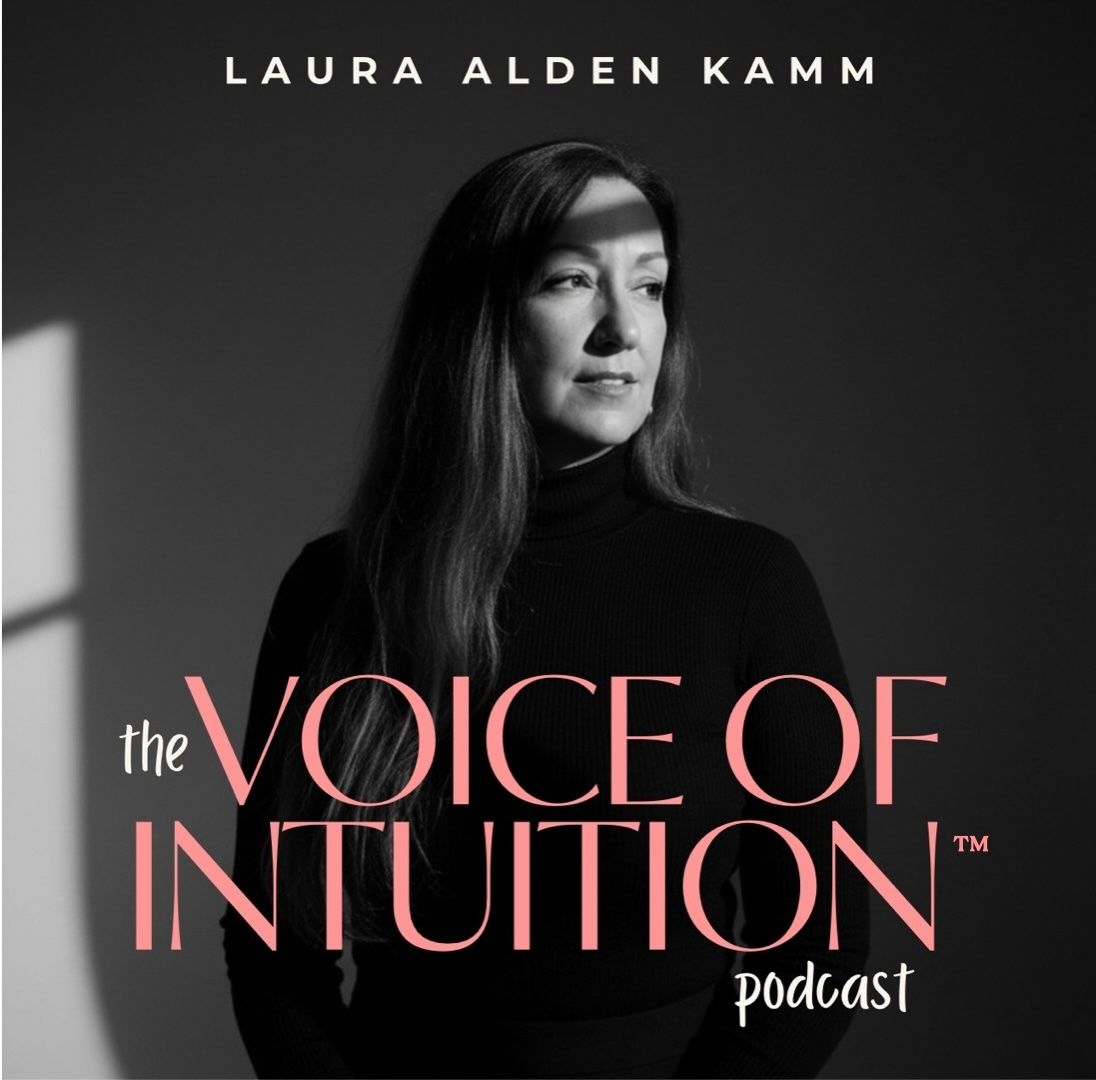
128 When Life Brings You to Your Knees — Intuition Carries You Through
There is a version of you that feels competent when life is orderly. You know how to handle your responsibilities. You respond to emails. You keep your promises. You make your plans. In that version of yourself, intuition feels almost elegant — a quiet companion that whispers guidance while you move through your well-constructed day.
And then life rearranges everything.
Illness arrives. Grief knocks without knocking. The person you love most in the world becomes fragile in a way that alters your sense of time. Suddenly, you are not living inside your calendar. You are living inside hospital lighting, long flights, waiting rooms, and the strange elasticity of uncertainty. You are tired in a way that sleep alone does not repair.
This is the moment when most people assume intuition disappears.
It does not.
In fact, this is precisely when it matters most.
There is a cultural fantasy that intuitive people somehow float above hardship. That if you meditate enough or pray enough or understand energy deeply enough, you will move through crisis with serene composure and photogenic grace. I would like to gently dismantle that illusion for you.
An intuitive life does not exempt you from pain. It equips you to remain oriented inside it.
When your nervous system is flooded, anxiety becomes loud. It narrates possible futures. It rehearses worst-case scenarios. It loops and loops, convincing you that if you think hard enough, you can control what has not yet happened. Anxiety escalates because it is searching for certainty.
Intuition does not escalate.
Intuition arrives quietly. It speaks in the present tense. It does not catastrophize. It does not defend itself. It offers a simple, grounded knowing — and then it waits.
In the hardest seasons of my life, the practice has not been to eliminate fear. It has been to separate fear from knowing. The most stabilizing question you can ask yourself when everything feels uncertain is this: What do I actually know to be true right now?
Not what you imagine. Not what you dread. Not what your mind is constructing three months ahead.
What is true in this moment?
When you ask that question sincerely, something steadier often answers. That steady voice may not tell you how the story ends. It may not promise recovery or resolution on your preferred timeline. But it will orient you. It will return you to the present, which is the only place intuition ever speaks.
When life is burning down around you, your work becomes surprisingly simple. You return to the basics with almost reverent attention. You sleep when you can. You drink water. You eat food that nourishes your body instead of punishing it. You protect your nervous system as if it were sacred equipment — because it is. Your body is the instrument through which your intuition moves. If you neglect the instrument, the signal becomes distorted.
You also allow yourself to feel what is real without turning it into prophecy. Crying is not collapse. It is released. Your body is built to process emotion in waves. When you let the wave crest and pass without attaching a catastrophic narrative to it, something inside you clears. After the tears, there is often a stillness. And in that stillness, intuitive clarity returns.
There is also the discipline of small joy.
Not forced positivity. Not spiritual bypassing. Not pretending everything is fine. But deliberate, specific moments that remind you beauty has not left the building. A conversation that makes you laugh unexpectedly. The smell of coffee in the morning. Light filtering through trees. A text message that arrives at precisely the right moment.
These moments are not a denial of suffering. They are fuel. They are how you remain human inside circumstances that might otherwise hollow you out.
Over time — especially in seasons that demand more of you than you feel prepared to give — you begin to discover something profound about your own nature. Your soul is not fragile. It feels fragile when your heart is breaking, but its structure is not easily destroyed. It is more durable than circumstances. More durable than grief. More durable than the sharp edges of uncertainty.
There may be moments when you feel scattered, as if parts of you have splintered across an invisible landscape. But what is essential in you reorganizes. It regathers. It blooms again. Intuition is the thread that helps you find your way back to yourself.
You do not cultivate intuition to avoid pain. You cultivate it so that pain does not erase you.
When life strips away what is comfortable and predictable, what remains is your essence. The self that existed before expectations layered themselves over your instincts. The self that knows how to stand steady even when the shore is not visible.
If you are in a hard season right now — illness, loss, exhaustion, too much responsibility for too long — do not measure your intuitive capacity by how inspired you feel. Measure it by whether you are still willing to pause and listen, even briefly.
Even for thirty seconds.
Even in a waiting room.
Even after you have cried in a place you never imagined you would.
Your intuition has not abandoned you. It does not know how to leave. It waits patiently beneath the noise, beneath the fear, beneath the story your mind is telling.
In the quiet that follows the storm, it will speak again.
Trust it.
It knows more than your fear does.
With love,
Laura 🪷